Budgeting for Beginners: 7 Mistakes to Avoid
In this post, I share mistakes to avoid and tips for budgeting for beginners. As you start budgeting, keep these things in mind, and learn from the mistakes I made early in my journey!
If you need to know HOW to budget for beginners, read this post here, and then come back to read about these budgeting mistakes to avoid!
7 Budgeting Mistakes to Avoid!
I have been creating a zero-based budget for over six years, and in the beginning, I made a LOT of mistakes. Here are seven mistakes to AVOID while budgeting for beginners.
1. Not Having Detailed Budget Categories
The first mistake to avoid is not having detailed budget categories in your budget. If your budget looks like this, you could be letting money fall through the cracks:
- Rent — $800
- Food — $200
- Utilities — $300
- Debt — $400
- Savings — $500
This budget does not have enough budget categories. Detailed budget categories are going to help you be more successful with your budget by being extra clear on where your money is going.
Find a list of 100+ budget categories HERE!
2. Not Budgeting Every Dollar of Your Income
When I first started “budgeting,” I made sure the bills were paid, but I didn’t plan out the rest of the money. This led to stress, not knowing if we would have enough money for gas, groceries, etc. In addition, we never saved money or put extra money towards debt because we didn’t know if we had any extra money.
Finally, I learned about the zero-based budget, and everything changed. Now, I budget until all of my income = my expenses. This means I plan where ALL the money is going, even how much we plan to spend on eating out, subscriptions, and debt. As Dave Ramsey says, give EVERY DOLLAR a job!
Use the budget categories you came up with from the mistake above to plan where your money is going.
If you would like to see an example of my REAL budget, read this post!
3. Not Having Margin in Your Budget
Another budgeting mistake you can make is not having margin in your budget.
Margin is the difference between your income and your necessary expenses. I am going to write a more detailed blog post on margin, but for now, think of your bills, housing, food, transportation, and other expenses you have to pay as your necessary expenses. Then, what is leftover is your margin. This can go towards fun things as well as reaching financial goals, such as paying off debt, saving, and investing. For example:
- Income = $5,000
- Necessary Expenses = $3,800
- Margin = $1,200
The bigger the margin, the better. My family lived with almost zero margin in our budget for years, and we learned that margin is important… No matter how small your income is, you need to create some margin.
I have been slowly cutting down on our grocery budget because we need more margin (even though grocery prices are increasing 😩). I am trying to force myself to put an extra $50 in savings each pay period, so we are more likely to have that extra money at the end of the month.
4. Not Tracking Your Transactions
After you create a budget, are your tracking your income and spending? If not, how do you know if you are sticking to your budget?
I used to set the budget and forget it and not really care about it. Once I started tracking my transactions every few days, I found I was more in tune with the budget and stayed in budget more often!
5. Forgetting to Save for Irregular Expenses
How are you budgeting for irregular expenses, such as your yearly car registration, school fees, or Christmas presents? This is where sinking funds come in.
When it comes to these big expenses that come once a year or so, it is helpful to create a budget category to slowly save for it throughout the year. That way you don’t have to pay for it all at once.
Set a sinking fund for big, irregular expenses, and plan to save an amount every month towards it. For example, if you want to have $600 for Christmas, save $50 a month towards your Christmas sinking fund.
6. Writing Your Budget on Paper
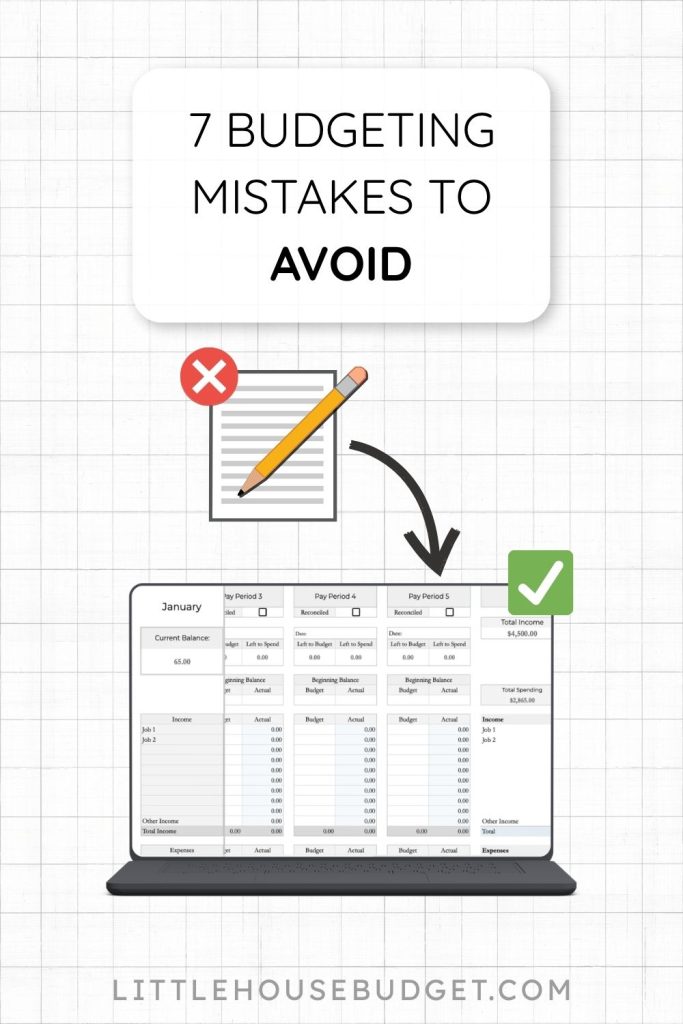
Are you making your budget from scratch every month? If you write your budget on paper, then you have to rewrite it every month. Budget templates are great because you don’t have to do as much work to create a budget. I have been budgeting on Google Sheets for years now because I can copy my yearly template each year. I just have to enter the numbers each pay period, and it’s done in minutes!
Use code HOUSEHOLD for 10% off my budget template! This is my special code just for my blog readers! Find the Google Sheets tracker —–> here.
7. Giving up if You Go over Budget
When you first start budgeting, it won’t be pretty. For my husband and I, it took awhile to get used to living within our budget and learning how much we spend in each budget category. It was a lot of trial and error. It’s unavoidable — you will make mistakes, too. But the important thing is to not throw the budget away after one bad week or even month. Review and reassess, and then make adjustments to your next budget.
Bonus: Budgeting by Month Instead of by Pay Period
Throwing in a bonus tip! Try budgeting by pay period. This is a budgeting game changer. I started budgeting by my husband’s pay periods shortly after I started my budgeting journey in 2020, and it has helped us stick to our budget and plan our money out better!
If you are paid monthly, then a monthly budget is great, but most people are paid biweekly or semi-monthly (or both!). My Google Sheets budget template helps you budget by pay period, so you can make a plan for every paycheck/pay period!
Conclusion
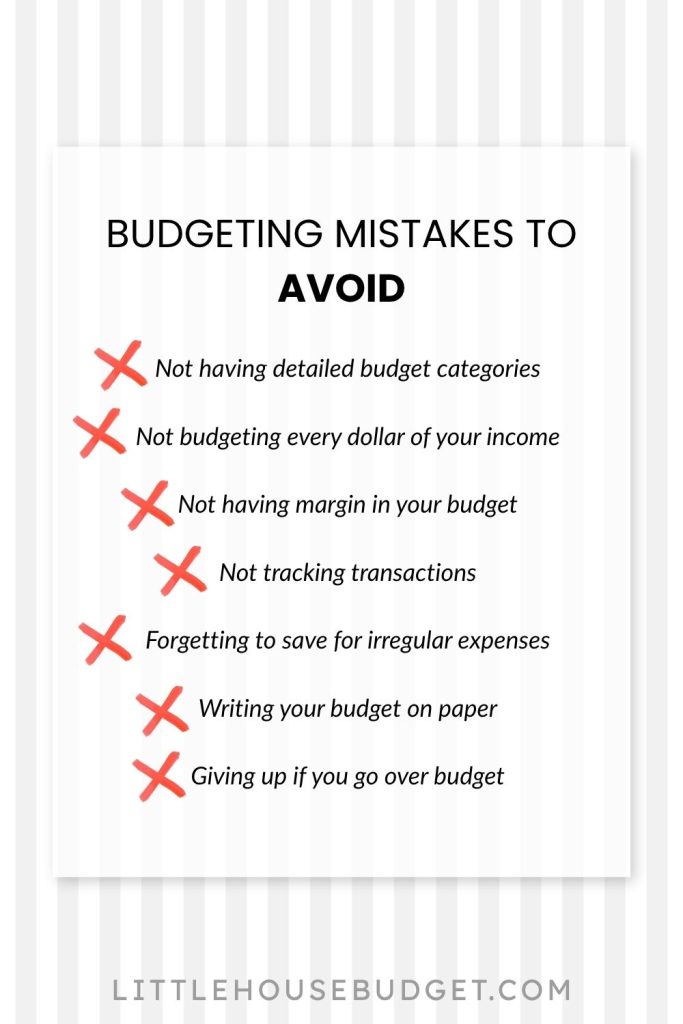
Let’s recap! Use detailed budget categories, create a zero-based budget, have margin in your budget, track your transactions, use sinking funds for irregular expenses, use a budget template, and don’t give up if you mess up your budget!
A lot of these budget mistakes can be avoided by using a really great budget template! My Google Sheets personal finance tracker has a simple, intuitive layout – no need to be a spreadsheet expert. Again, use code HOUSEHOLD for a discount!
I hope these tips help, and keep at it! Try different budgeting methods out until you find the one that works best for you!
Pin This!


![Dave Ramsey Recommended Budget Percentages [Calculator]](https://littlehousebudget.com/wp-content/uploads/2024/04/Dave-Ramsey-Budget-Percentages-Featured-Image-720-×-900-px-2.jpg)


